

Without a bombshell official announcement or dedicated keynote, everything indicates that Apple is actively preparing the next evolution of its high-end MacBook Pro. The M5 Pro and M5 Max chips are expected, and even though the brand remains true to its usual discretion, the clues are piling up. The goal here isn't to fuel wild rumors, but rather to take stock of what we can reasonably expect from these new machines.
Targeted performance gains rather than a revolution
With the M5 Pro and M5 Max, you shouldn't expect a visible revolution, but rather a targeted increase in power.
Apple now seems to be prioritizing fine-tuning over raw performance. The expected gains primarily concern the processor and graphics processing unit, with better workload distribution and further improved energy efficiency.
On paper, the evolution may seem modest, but in professional use, it is often these gradual improvements that make the difference on a daily basis.
Designed for professional use
In practical terms, these new chips should prove particularly adept at handling heavy and prolonged tasks.
High-resolution video editing, 3D rendering, compilation of complex projects, and processing of large volumes of data should all benefit from smoother and more stable execution.
One of the expected strengths concerns the handling of intensive multitasking, with fewer slowdowns when several demanding applications are running simultaneously.
It's not a promise of spectacular performance with every click, but a feeling of consistency and control, even under heavy load.
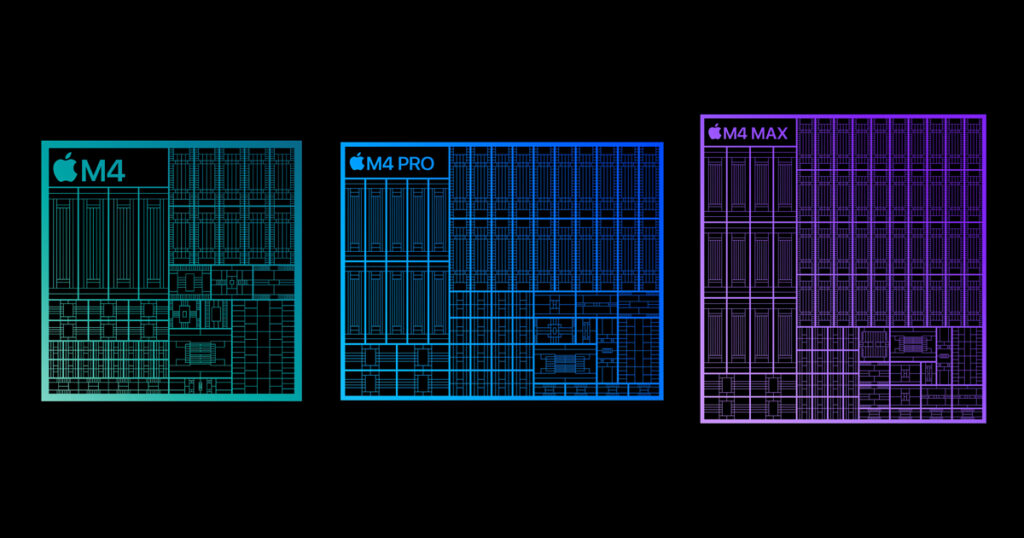
M5 Pro and M5 Max: two very distinct approaches
The distinction between M5 Pro and M5 Max should remain true to Apple's current philosophy.
The Pro version aims for a balance between power and battery life, suitable for creators, developers and mobile professionals who need solid performance without sacrificing portability.
The Max version, on the other hand, is clearly aimed at those who use their MacBook Pro as a true mobile workstation. In this specific case, the priority is given to raw power and the ability to handle very heavy workloads, sometimes over long sessions.
A design that prioritizes continuity
In terms of design and hardware, no major changes are expected. The current MacBook Pro chassis is already considered a refined design, both in terms of cooling and connectivity, as well as build quality.
Apple seems to have opted for stability, preferring to focus its efforts on what is not immediately visible.
The real evolution, therefore, lies inside the machine, where the chip and the operating system work together.
macOS and M5: optimization designed as a whole
Indeed, macOS plays a central role in this new generation.
One of Apple's major advantages lies in its ability to design hardware and software together. The M5 MacBook Pro should therefore benefit from specific system-level optimizations, enabling better resource management and smarter use of available power.
This comprehensive approach remains one of the major arguments that distinguishes the MacBook Pro from the rest of the market.

An expected release in the near future
The question of the release date obviously remains at the heart of the discussions.
At this stage, no official announcement has been made, but several signs point to an imminent arrival. Apple typically aligns its hardware launches with major macOS updates, suggesting that the MacBook Pro M5 Pro and M5 Max could be unveiled in the near future.
This is more of a likely window than a certainty, but the timing seems consistent with the brand's usual practices.