

While the Xbox Series X continues its run, Microsoft is already actively working on its next generation of consoles. Several official statements, new strategic directions, and various pieces of information from the Xbox ecosystem are gradually beginning to outline the contours of this future hardware.
Code name, PC-like architecture, artificial intelligence, renewed partnership with AMD… the future Xbox seems to want to go far beyond a simple increase in power.
So, where does Microsoft really stand in May 2026 regarding the post-Series X era?
Microsoft has already confirmed it is working on the next generation Xbox.
For a long time, the future of the Xbox was mainly a matter of rumor. This is no longer really the case.
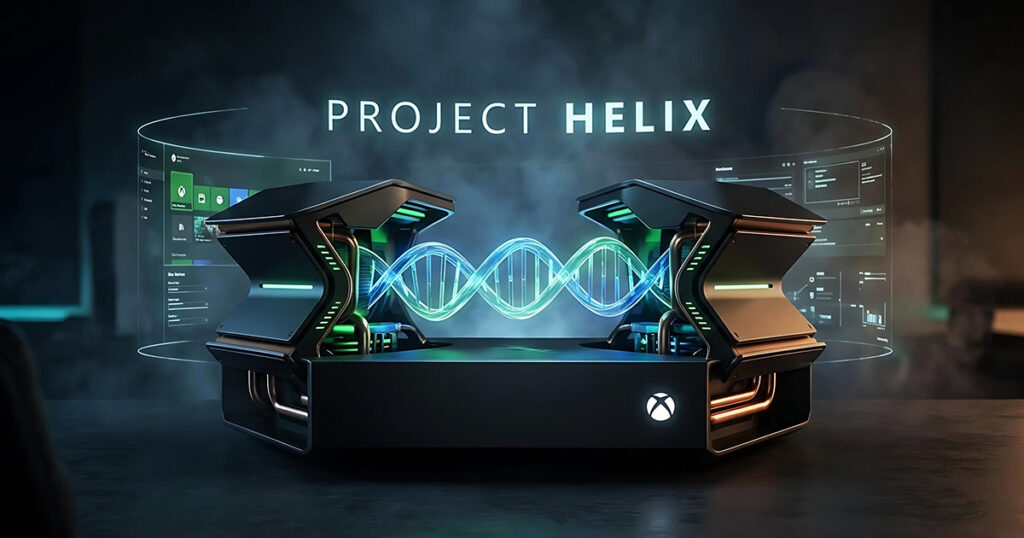
Microsoft has officially confirmed that the next generation of Xbox is currently in development. The project is now often referred to as... Project Helix, although this name could still change before an official commercial presentation.
The company is obviously remaining cautious about the technical details, but several clues show that Microsoft is already actively preparing the next step in its gaming ecosystem.
Moreover, the objective doesn't seem to be limited to simply a "more powerful Xbox Series X." The overall strategy appears to be much more ambitious.
An Xbox much closer to a PC?
This is probably one of the most interesting topics surrounding the future Xbox.
For several years, Microsoft has been gradually bringing its console universe closer to its PC universe: Game Pass, Xbox Play Anywhere, Windows integration, cloud gaming… the line is becoming increasingly thin.
Project Helix could take this logic even further.
Several sources suggest an architecture built more around a modernized Windows base, while retaining a simplified console experience.
This could open up several possibilities:
- better software compatibility
- a more flexible environment
- facilitated development for studios
- closer ties between PC and Xbox games
Some speculations even go so far as to suggest a greater opening towards certain ecosystems usually associated with PC gaming.
At this stage, nothing is officially confirmed, but one question is already being asked frequently:
Will the next Xbox remain a traditional console… or will it become a simplified form of living room gaming PC?
AMD is expected to power the upcoming machine again.
On the hardware side, Microsoft seems to want to continue its partnership with AMD.
The next Xbox would use a new generation of custom AMD SoC, designed specifically for Microsoft's needs.
This new architecture could bring about several important developments:
- Enhanced CPU power
- new graphic leap
- improved ray tracing management
- new upscaling technologies
- better energy efficiency
The evolution of AMD technologies around FSR, AI-assisted rendering, and recent GPU architectures could also play a major role in this future generation.
The goal is no longer just to increase the number of pixels displayed, but also to produce more complex, more dynamic and potentially more technically intelligent worlds.
Artificial intelligence could become a cornerstone of the next Xbox
It is impossible to discuss Microsoft's current technological strategy without talking about artificial intelligence.
The company is investing heavily in AI on many fronts, and gaming does not seem to be an exception to this trend.
Several potential uses for the upcoming Xbox are regularly mentioned:
- improved graphics rendering
- next-generation upscaling
- more natural animations
- more believable AI behavior in games
- dynamic performance optimization
Artificial intelligence could also intervene more directly at the system level, particularly for certain functions related to the interface, recommendations or the management of the Xbox ecosystem.
Even though many elements remain theoretical today, it seems difficult to imagine a next-gen Microsoft Xbox without a strong AI component.
Backward compatibility should remain a priority
For several generations, Microsoft has strongly emphasized the continuity of its Xbox catalogue.
Digital library, classic Xbox games, Game Pass, cloud saves… the entire current strategy relies heavily on preserving the existing ecosystem.
The next Xbox should logically continue in this direction.
Even without a detailed announcement, it seems highly likely that Microsoft is seeking to maintain a high level of backward compatibility.
For gamers, this point remains particularly important: nobody wants to completely rebuild their digital library with each generation.
Release date: what do we really know in May 2026?
As is often the case with major hardware projects, the question of the timeline is generating a lot of discussion.
As of May 21, 2026, Microsoft has not yet announced an official release date.
However, the available information points to a window located around 2027.
Some sources indicate that Microsoft is already planning to release alpha hardware versions for developers starting from this period.
This means that the future Xbox is making concrete progress internally, but an immediate commercial release still seems unlikely.
In other words: the machine probably already exists in some laboratories and development environments… but its public launch still needs time.
The Xbox ecosystem continues to evolve.
Even without a new console immediately available, the Xbox universe continues to evolve.
New rumors are circulating about future accessories, possible evolutions of Xbox controllers and an increase in uses related to cloud gaming.
Some discussions specifically mention:
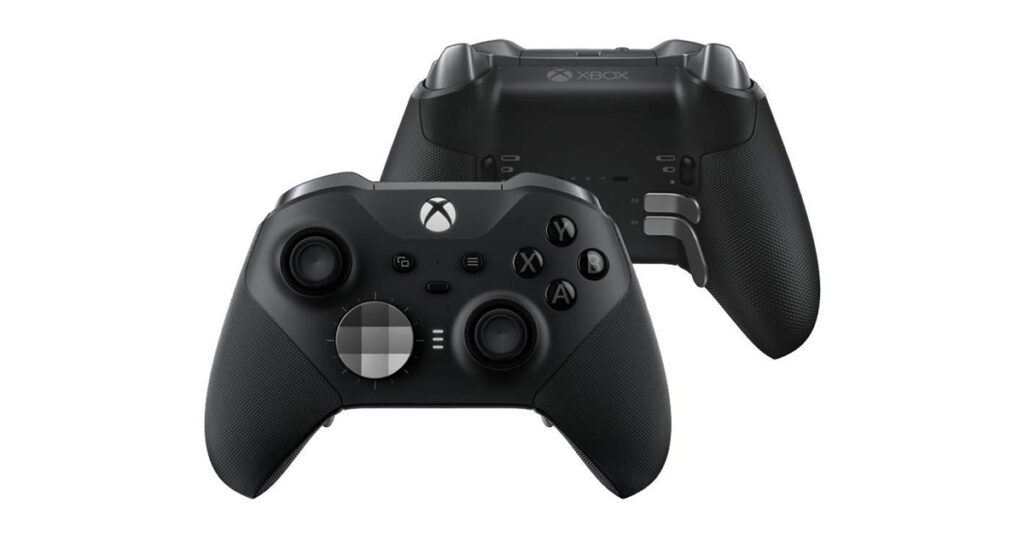
- a future next-generation Elite controller
- more connected features
- increased integration of cloud gaming into the Xbox ecosystem
These elements do not directly relate to the future console, but they clearly show that Microsoft is already actively preparing the next step in its gaming strategy.
Conclusion
The next Xbox remains largely shrouded in mystery in May 2026, but several strong trends are already beginning to emerge.
Microsoft confirms it is working on a new generation, AMD is expected to remain at the heart of the hardware, artificial intelligence could play an important role, and the Xbox ecosystem seems to be continuing to gradually move closer to the PC world.
Project Helix therefore does not simply resemble a “Series X 2”.
The future machine could well represent a deeper evolution of the Xbox vision, halfway between a traditional console, connected services and a gaming environment strongly integrated with the Windows universe.